
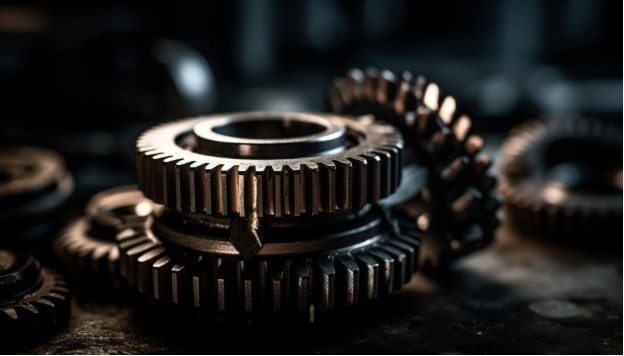
Precision gears speak to accuracy, reliability, and durability. These gears are widely used in larger industries such as aerospace, medical equipment, robotics, sports cars, and other applications that require safety during operation.
It’s a high-duty gear that is used to prevent backlash and nose. It has high torque capacity, which makes it ideal for safe use. You need to know how to choose the right gear and materials to improve work efficiency and extend equipment lifespan without causing wear and tear.
Let’s look below at the capabilities of precision gear and the types and materials it uses.
Precision Gear Capabilities
Precision gear manufacturing is performed in a controlled environment to ensure accuracy. This accuracy results in various capabilities of the gear, with the main one being no backlash. Regular gear has limitations, and while rotating, friction generates heat, causing the gear to change sides. We know that precision gears are used in aerospace and other industries in which gears rotate continuously under high forces. These gears have high torque, which enables them to withstand such pressure and avoid wear and tear.
One of the main reasons to choose precision gear is its low vibration and noise. These are used in luxury cars and hospital machines where comfort and peace matter a lot.
When precision gears are used in factories, their main purpose is to deliver work and increase efficiency. Normal gears use so much electricity as they require much energy to complete the task, while precision gears don’t require much effort.
Types of Precision Gear
Helical Gears: These gears are used in machines that must carry heavy loads at very high speeds. They have slanted teeth and run smoothly without making noise.
Bevel Gear: They are more common in vehicles as they transfer motion between shafts that intersect mostly at 90 degrees.
Hypoid Gear: It has helical teeth. Its shafts are placed offset and used in heavy machinery.
Worm Gear: It has a screw-type gear, called a worm, and another gear attached like a wheel. The screw worm rotates, causing the wheel gear to rotate with it. It is used in elevators and conveyor belts.
Spur Gear: It has straight teeth and is easy to manufacture. They are built for lower-load tasks.
Planetary Gear: A gear used in the solar system is a planetary gear. Its design is just like a sunflower, and it is used to rotate the solar tracking according to the sunlight.
Materials Used in Precision Gear
Metal
There are three types of metals used in different ways in the manufacturing of precision gears. Steel is the strongest and most durable material ideal for high-speed and load operations.
Brass is also used, which is quieter and more wear-resistant. It is used for machines that prioritize silence. Aluminum is also used, but not widely. It’s lightweight and less wear-resistant.
Plastic
Equipment that doesn’t require much load or stress uses precision wear made with plastic. It offers resistance to corrosion and is light in weight.