
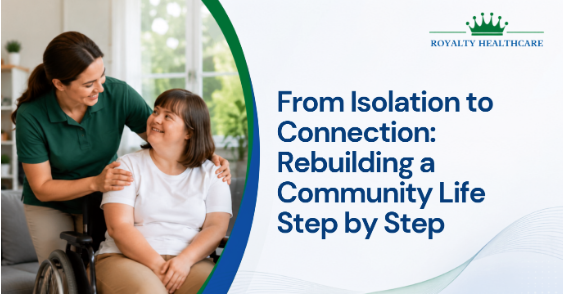
When mental health is hard, the world can quietly shrink. Invitations go unanswered, familiar places start to feel overwhelming and days can pass without leaving home. For many people living with psychosocial disability, isolation is both a result of poor mental health and something that makes it worse.
Reconnecting with community is rarely one big step. It usually happens through small, repeated ones: a short walk to the local shops, a weekly class, a coffee with someone who understands. With the right support, those small steps can rebuild confidence, routine and a sense of belonging.
This guide explains how the NDIS approaches psychosocial disability, practical ways to step back into community life, how funding is changing and how to make every supported hour count.
How the NDIS Approaches Psychosocial Disability
The NDIS uses the term psychosocial disability for the impact a mental health condition can have on everyday life, such as keeping routines, managing a home, maintaining relationships or taking part in work, study and community activities. What matters to the NDIA is functional impact, not the diagnosis itself.
The NDIS does not replace clinical care. GPs, psychiatrists, psychologists and community mental health teams remain responsible for treatment, while the Scheme funds supports that build capacity, independence and participation. Many participants work with a psychosocial recovery coach as well as support workers who help with daily living and getting out into the community.
Good NDIS mental health support is recovery-oriented. In mental health, recovery does not necessarily mean being free of symptoms. It means living a meaningful life with hope, choice and control, even when symptoms come and go, and community connection is often a big part of that. Recovery looks different for everyone: for one person it might mean returning to work, for another feeling comfortable at a weekly market.
NDIS supports are not crisis services. In Queensland, 1300 MH CALL (1300 642 255) connects you to public mental health services 24 hours a day. Lifeline is available on 13 11 14, and in an emergency, call Triple Zero (000).
Small Steps Back Into Community Life
There is no single right way to reconnect, but some approaches make the first steps feel more manageable. These are worth discussing with your support worker or recovery coach.
- Start with familiar places. A short trip to the local shops, park or library is often easier than somewhere new. Familiar settings reduce uncertainty and give early wins that build confidence for the next step.
- Follow real interests. Art, gardening, music, sport, animals or cooking are all good starting points. When an activity genuinely matters to you, it is easier to keep going on the days motivation is low.
- Go at quieter times first. Crowds and noise can make anxiety worse. Visiting a café, pool or class at a quieter time of day lets you get comfortable before trying busier sessions.
- Build a weekly rhythm. Doing the same activity on the same day each week turns it into a habit. Predictable routines also make it easier for workers to plan and for you to know what to expect.
- Practise getting there. Travel can be a barrier on its own. Practising a bus or train route with a worker, then doing parts of it alone, builds a skill that opens up many other activities.
- Try groups with shared experience. Peer support groups and recovery-focused groups connect you with people who understand. Group activities with a worker present can also feel safer than joining a new group alone.
- Work towards volunteering or study. When you feel ready, volunteering, a short course or part-time study can add purpose and structure to the week. These are big steps, so take them gradually and build in support at the start.
Families can play a big part too. Encouraging outings with gentle invitations, practical help such as a lift and real interest in small wins usually works better than pushing for big changes. Carers need support of their own as well, and Carer Gateway (1800 422 737) offers free services such as counselling, coaching and peer support for carers.
How Community Support Is Funded
Community-based support can draw on different parts of an NDIS plan. Help to take part in social and community activities usually comes from the core budget for assistance with social, economic and community participation. Capacity building funding for increased social and community participation can help build the skills and confidence to take part more independently.
Funding in this area is changing. The NDIA has begun reducing the Social, Economic and Community Participation and Improved Daily Living Skills budgets as plans are created, reassessed and renewed. According to the NDIA, the impact will vary for each participant, and the change itself is not a reviewable decision. Participants can still ask for a plan variation or reassessment if there is a significant and ongoing change in their circumstances, such as their ability to manage daily activities, their living arrangements or their informal supports.
For participants using NDIS community participation Brisbane supports, this makes purpose and evidence more important than ever. Ask your support coordinator or plan manager which budget each support draws from, so you know what may change at your next plan.
Free and low-cost options can also extend what your plan covers. Brisbane City Council’s Move Well Brisbane program offers free and low-cost activities, and local libraries, community centres and peer groups offer more ways to stay connected alongside funded support.
Making Every Supported Hour Count
Whether you are new to mental health support Brisbane providers offer or have used it for years, these habits help community support deliver lasting results.
- Link each outing to a goal. “Join a weekly art class and get there on my own by the end of the term” gives every session a purpose. Clear goals also make it easier to show your next planner what the support achieved.
- Agree how the worker’s role will change. At first, a worker may stay beside you for the whole activity. Over time they might wait nearby, then simply check in afterwards. Talking about this early helps independence grow naturally.
- Mix one-on-one and group support. One-on-one time suits new or difficult steps, while group activities with a worker present can cost less per hour and add social connection. The right mix depends on your goals and comfort.
- Plan for harder days. Mental health often fluctuates. Agree in advance what a smaller version of the activity looks like, such as a short walk instead of a full class, so a hard day does not undo your progress.
- Keep simple records of progress. Note attendance, new skills and moments of confidence. A short log kept over a few months becomes valuable evidence at plan reassessment and helps you see how far you have come.
- Keep your treating team in the loop. With your consent, sharing progress with your GP, psychologist or psychiatrist helps everyone work towards the same goals and spot early signs that extra support is needed.
- Review and adjust regularly. Every few months, look at which activities are working and which are not. Dropping something that is no longer helpful makes room for something that might be.
How Royalty Healthcare Supports Recovery and Connection
Royalty Healthcare (ABN 35 654 251 519) is a registered NDIS provider certified by the NDIS Quality and Safeguards Commission and has supported participants since 2019. From our office in Strathpine, we work with participants across Brisbane, Ipswich, Logan, the Gold Coast and the Sunshine Coast.
Our mental health support is person-centred and recovery-focused, built around your voice, choices and goals. It includes help with daily living, life skills such as budgeting and planning, and emotional encouragement, goal setting and motivational support. We work alongside clinical treatment, not instead of it, and with your consent we coordinate with clinical providers and community services.
Our community participation supports include social outings, sports and fitness, group learning workshops, creative classes and community volunteering, one-on-one or in groups, on weekdays or weekends. We start by understanding your goals, plan activities around your interests and comfort level, then review and adjust as your confidence grows. Every team member is trained in trauma-informed care.
Final Thoughts
Reconnecting with community after a period of poor mental health takes time, and that is okay. Start with familiar places and real interests, build a weekly rhythm and let your worker step back as your confidence grows. With funding changing, give every supported hour a clear purpose and keep simple records of what it achieves. Small steps, repeated often, can turn a shrinking world back into a life full of people, places and possibilities.
Disclaimer: This article provides general information about the NDIS and is not clinical, legal or financial advice. NDIS rules and funding arrangements can change, so check current guidance at ndis.gov.au or with your support coordinator. If you need urgent help, call 1300 MH CALL on 1300 642 255, Lifeline on 13 11 14 or Triple Zero (000).